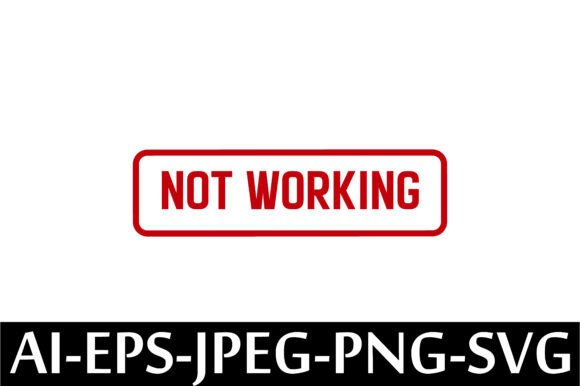
NOT WORKING Rubber Stamp Design Vector Review for Real Projects
As an embroidery designer who’s tested countless digital files, I always approach a new NOT WORKING Rubber Stamp Design Vector with a mix of curiosity and caution. This kind of design can be perfect for adding personality to handmade products or branding items in a small shop, but it also needs to perform well in real-world stitching scenarios. Let me walk you through my evaluation from the perspective of someone planning to use this file in actual projects.
First Impressions: A Bold Statement with Simplicity
The NOT WORKING rubber stamp vector immediately catches attention with its bold typography and clear message. It's not overly complex, which is a good sign for machine embroidery work. The text is straightforward and legible even at smaller sizes, making it suitable for a variety of uses. The layout feels intentional—no unnecessary frills or hidden details that might complicate stitching later on.
What stands out is how this design could naturally fit into a range of creative contexts. Whether you're designing a custom sweatshirt for a boutique launch or crafting personalized gifts for your Etsy store, this file offers a strong visual identity. Its playful yet professional tone makes it versatile enough to work on both casual apparel and commercial embroidery projects.
Visual Personality and Project Fit
This design has a distinct character—think retro signage meets modern minimalism. It brings a sense of humor while maintaining a clean aesthetic. That balance is key when choosing an embroidery file for a product like a tote bag design or a holiday gift. You want something that speaks clearly without being too loud.
I see it working especially well on custom apparel, such as baby clothes or nursery decor. The simple shape and limited detail mean it won’t overwhelm the fabric or clash with other elements. It’s also great for embroidered patches or applique designs where clarity is more important than intricacy.
Real-Life Embroidery Use Cases
Let’s say I’m preparing a batch of custom embroidered tote bags for a client’s eco-friendly shop. I’d consider using the NOT WORKING design as a subtle brand statement or a cheeky warning on a promotional item. Its straightforward nature makes it easy to incorporate into larger layouts or stand alone effectively.
For a sweatshirt embroidery project, this design would make a nice graphic near the hem or sleeve. It doesn’t require high stitch density, so it’s less likely to cause puckering or distortion on stretchy fabrics. Just make sure to adjust stitch spacing if needed and use a stabilizer that matches the garment material.
In a baby item scenario—like a onesie or a plush toy—the simplicity of this file is a huge plus. Tiny lettering can be tricky, but the NOT WORKING design avoids that by keeping text large and readable. It could add charm to a baby blanket or pillow cover without compromising the softness or comfort of the piece.
If you’re into holiday embroidery, imagine this phrase stitched onto a festive apron or kitchen towel. It adds a touch of wit and whimsy, which can enhance buyer engagement and make your handmade product feel more personal and memorable.
Where to Use Carefully
While this design is adaptable, there are some limitations to keep in mind. If you plan to embroider it on very thin or textured fabrics, you’ll need to adjust stitch types accordingly. For example, switch from running stitch to satin stitch for better coverage on delicate materials.
Small hoop sizes could be an issue here. Because the phrase is quite long, you may need to scale it down significantly, which could affect readability. Always check the hoop size requirements before finalizing placement, especially if you're working with limited space.
Also, avoid using it on dark fabric unless you have thread colors that provide strong contrast. The default thread choices may not pop as well as they do on lighter backgrounds. Consider creating a black-and-white mockup first to test visibility.
Curved surfaces like caps or hats can distort the layout. If you're thinking of using it for cap embroidery, make sure to simulate the curve in your software and possibly split the design into segments for smoother results.
Impact on Product Value and Customer Perception
From a business standpoint, the NOT WORKING design can add value to your finished product if used correctly. It helps with brand consistency—especially if your craft business or Etsy listing leans into quirky, handcrafted aesthetics. Customers appreciate thoughtful details, and a well-executed design like this one can elevate the overall look of your handmade product.
It also contributes to giftability. Personalized gifts often benefit from short, impactful phrases. This design could easily become a signature element in your holiday embroidery collection or wedding gift line. The right placement and thread color can turn a simple item into something meaningful and recognizable.
On the flip side, if the design appears too faded or poorly stitched due to incorrect settings, it might lower customer trust. Make sure to review stitch density and choose appropriate thread colors for each application. These steps ensure your product maintains a professional appearance and reinforces your brand image.
Designer Notes for Optimal Use
- Test on scrap fabric first: Before committing to a full production run, try stitching the NOT WORKING design on a sample piece. This will help you identify any issues with stitch flow or fabric reaction.
- Check thread color contrast: Especially important for light-colored fabrics. Use a thread color chart to ensure the design remains visible and attractive after washing.
- Review stitch density: If you’re using this on a thicker fabric like denim or canvas, increase stitch density slightly. For lightweight materials, reduce it to prevent puckering.
- Confirm hoop size: Some embroidery machines require specific hoop dimensions. If the vendor didn’t specify, double-check before downloading.
- Inspect small details: Although this design isn’t highly detailed, always zoom in to ensure no tiny elements are lost during scaling.
- Use proper stabilizer: Depending on the fabric, you might need tear-away, cut-away, or wash-away stabilizers. Don’t skip this step—it can save your project from distortion.
- Test in black and white: Visualize how the design will appear without color to assess its clarity and impact.
- Compare light and dark fabric backgrounds: Try stitching the design on different tones to find the best match for your target audience.
- Verify licensing terms: Since this is part of the Freebies category, it’s essential to confirm whether the graphics can be used for commercial purposes. Always read the fine print before selling finished items or digital embroidery files.
Design Versatility and Professionalism
The beauty of the NOT WORKING design lies in its adaptability. It can serve as a decorative accent on a tote bag or take center stage on a custom sweatshirt. However, its effectiveness depends heavily on how it’s implemented. Used wisely, it can contribute to a cohesive look across your small shop product lineup.
Embroidery designers should consider how this file fits into their existing design assets. It works best in minimalist collections or alongside more intricate elements. The key is ensuring that the final product looks intentional and polished—not slapped on.
Final Thoughts on NOT WORKING Rubber Stamp Design Vector
Overall, the NOT WORKING rubber stamp design vector is a solid choice for many embroidery projects. Its clean lines and bold message make it a standout option for those looking to add a touch of personality without overcomplicating the design process. But as with any digital embroidery file, success comes down to preparation and understanding the nuances of your materials and tools.
If you're an Etsy seller or a creative entrepreneur building a handmade product line, this design can be a useful addition to your portfolio—especially if you're targeting customers who appreciate understated humor and vintage-inspired visuals. Just remember to tailor it to your specific project needs and always prioritize quality control in your embroidery workflow.